

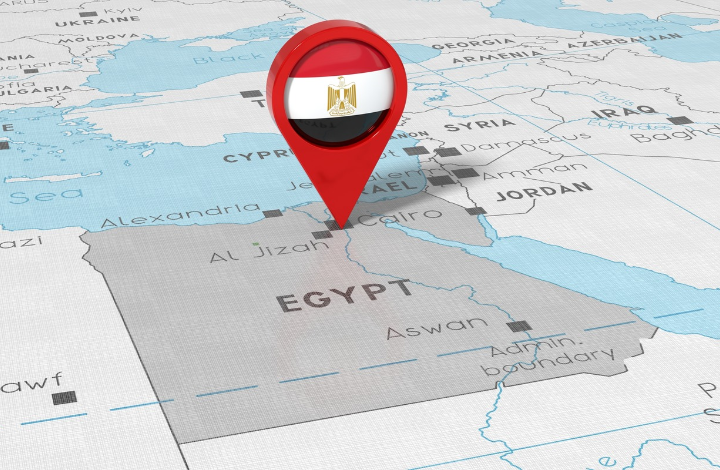
When considering the significant and expanding paints and coatings market in North Africa, Egypt, home to more than half the region’s population, is a key focus for manufacturer’s commercial efforts. Indeed, the country, which is currently a source of stability in the wider Middle East region, is seeing its paints and coatings industry enter a period of rapid expansion, driven by surging demand across the construction, industrial manufacturing and energy infrastructure sectors.
Valued at USD 1.36 billion in 2026, Egypt’s paints and coatings market is forecasted to reach USD 1.73 billion by 2031, representing a CAGR of 4.85%, according to India-based market research firm Mordor Intelligence, which told the Coatings Group (1). Near-term growth is also expected to remain strong, with the market projected to exceed USD 1.45 billion in 2027. This growth is being driven by one of the largest construction programmes in the Middle East and Africa, particularly the ongoing development of the New Capital, a government and administrative hub located east of Cairo.
However, this momentum comes with mounting cost pressures, according to Egyptian paint sector executives who spoke to the Coatings Group. Squeezed margins, significant currency volatility and reliance on imported specialist materials mean that operational efficiency is now just as critical as production capacity, industry insiders said. For Egyptian paint and coatings manufacturers, whose combined production capacity exceeds 400 million litres annually, the challenge is to meet rising domestic demand while expanding their presence in overseas markets without compromising profitability.
These topics will take centre stage at the Egypt Coatings Show, organized by the Coatings Group, which will take place from 10-12 January 2027 at the Egypt International Exhibition Center in Cairo.
Egyptian economy is expanding
Despite economic headwinds driven by regional instability, the International Monetary Fund (IMF) forecasts that Egypt’s GDP will grow by 5.1% in 2026 before moderating to 4.7% in 2027. Against this backdrop, Egyptian paint and coatings manufacturers are committing fresh capital to increase production, modernise facilities and strengthen Egypt’s position as a regional manufacturing hub.
The International Group for Modern Coatings (MIDO), for example, secured USD 45 million in mezzanine debt financing from Vantage Capital in April 2026 to support its expansion plans in Alexandria and beyond (2). Meanwhile, Jotun Egypt has invested USD 100 million over the past three years in a new manufacturing facility in 10th of Ramadan City (3). However, as Managing Director Ibrahim AlShami explained, expanding production capacity does not shield companies from wider economic disruption (4).
“Higher energy and raw material costs, inflation and exchange rate volatility can affect pricing, material availability and project timelines,” AlShami told the Coatings Group. “To manage these challenges, Jotun Egypt has increased safety stocks where possible, sourced raw materials from alternative suppliers, explored alternative transport routes and strengthened local procurement.”
Domestic Egyptian coating expansion
Domestic manufacturers are pursuing similar expansion strategies. Golden Paints, owned by Jordan’s Golden Chemical Industries, is investing more than USD 1 million in two production lines in Egypt for automotive coatings and heat-resistant paints, according to local newspaper Al Borsa News (4). Meanwhile, Queen Coatings, based in Egypt’s Nile Delta in Damietta Governorate, plans to increase its manufacturing capacity by more than 20% to meet growing demand for wood coatings. The company intends to direct around 40% of its output towards export markets across the Gulf, the wider Arab region and Africa (5).
Architectural and decorative paints remain the largest segment of Egypt’s coatings market, accounting for approximately 64.8% of total revenue, according to Mordor Intelligence. However, demand for more specialised products is also increasing, particularly protective and marine coatings, said AlShami. These segments are forecast to grow at a CAGR of 5.12% through to 2031. Industrial development, energy infrastructure and engineering projects are helping to drive this shift, including activity around the Suez Canal Economic Zone, according to Mordor Intelligence (6).
The geographical distribution of construction activity is also changing. “The New Administrative Capital and other new city developments have been important sources of demand for our protective coatings business,” AlShami said. Applications include fire protection for landmark buildings, such as the new Egyptian Parliament and Central Bank buildings in the New Administrative Capital, as well as protective coatings for steel used in a new light rail system linking Cairo with the country’s new administrative and political centre.
However, as government-backed construction programmes move beyond their initial phases, the sources of demand are evolving. “Following the completion of major projects in the capital in 2024 and the gradual launch of new phases, activity has shifted towards private developments in new cities and along the North Coast,” AlShami added (7).
Sustained investment in the real estate sector is also expected to support growth in Egypt’s coatings market in the coming years. Residential construction remains the sector’s primary growth driver, accounting for 65% of total market revenue (8).
Libya
Moving westwards, Libya’s construction sector and its reliance on imported products present significant opportunities for international suppliers in the country’s paints and coatings market. With a population of approximately 7.5 million, Libya is a predominantly desert and arid country. However, financing constraints, currency instability and continued political uncertainty, stemming from the presence of rival governments based in Tripoli and Benghazi, can affect both market demand and supply chains.
In September 2026, US-based market intelligence platform IndexBox published an analysis of Libya’s market for water-based acrylic and vinyl paints, estimating that imports currently account for between 70% and 85% of total supply (10).
IndexBox also estimates that decorative coatings account for between 55% and 65% of demand. Industrial coatings are also an important segment, reflecting Libya’s substantial oil and gas sector, while water-based formulations are gradually gaining market share. The report forecasts low to mid-single-digit annual growth through to 2035.
Looking ahead, housing developments are expected to generate additional demand. In April 2026, Essam Al-Tamouni, Minister of Housing and Construction in the Tripoli-based Government of National Unity (GNU), announced cooperation with China State Construction Engineering Corporation Ltd on a proposed contract to build 20,000 housing units in Benghazi (11). However, the project would require the support of the eastern Libyan Government of National Stability to proceed.
Meanwhile, Libya’s domestic paints and coatings industry is working to strengthen its technical capabilities. For example, on 13 April 2026, Almadina Misurata Paints, based in western Libya, hosted a laboratory qualification committee from the Libyan Iron and Steel Company (LISCO). The committee assessed the company’s laboratory facilities, testing equipment and quality management system (12).
Tunisia
Neighbouring Tunisia may be a smaller market, with a population of approximately 12.5 million, but it represents a significant import market for paints and coatings suppliers. According to Tunisia’s National Institute of Statistics, the value of imported paint products reached TND 371 million (USD 123 million) in 2025, down from TND 405 million (USD 134 million) in 2024 (13).
Meanwhile, Germany-based business data provider Statista estimates that Tunisia’s market for paints, wallpaper and related supplies will be worth more than USD 325 million in 2026, rising to over USD 350 million by 2030 (15).
Despite strong competition from imported products, domestic paints and coatings manufacturers are looking to strengthen their market positions by developing specialised products and expanding exports to regional markets.
According to Tunisia’s Agence de Promotion de l’Industrie et de l’Innovation (APII), or Agency for the Promotion of Industry and Innovation, the country is home to 36 businesses operating in the paints, adhesives, resins and inks sectors, each employing at least 10 people.
World Bank trade statistics show that exports of non-aqueous paints and varnishes were valued at USD 1.47 million in 2024, while overseas sales of liquid products reached USD 1.32 million. Export destinations included Libya, Türkiye, Gabon and Algeria.
Algeria
Meanwhile, Algeria’s paints and coatings market is experiencing lower overall demand than in previous years, according to Ali Kerkout, Commercial Manager at state-owned ENAP (Entreprise Nationale des Peintures). Competition is particularly strong in the building segment, which serves households, contractors, developers and institutional clients, including public housing agencies AADL and OPGI, Kerkout told the Coatings Group.
ENAP expects the industrial sector to become its main growth driver from 2027 onwards. “The industrial sector should represent the main engine of growth,” Kerkout said, pointing to rising demand for specialised products and established customers such as national oil and gas company Sonatrach and the Ministry of National Defence. The company continues to develop its specialist product portfolio, including improvements to IGNIFUGE, its fire-retardant coating for steel, concrete, walls and wood. ENAP describes IGNIFUGE as an “innovative Algerian fire-resistant” product, Kerkout said (14).
Given Algeria’s sizeable oil and gas and manufacturing sectors, industrial coatings represent an important part of the country’s market. India-based market research firm 6Wresearch estimates that Algeria’s industrial coatings market was worth USD 215 million in 2025 and will reach USD 235 million by 2032, representing a compound annual growth rate (CAGR) of 1.3% (15).
Furthermore, Algeria, which has a population of approximately 48 million, imported USD 19.14 million worth of non-aqueous paints and varnishes in 2024, highlighting continued demand for specialist imported products, according to World Bank trade data (16).
Morocco
Morocco, North Africa’s westernmost market, is experiencing growth in paints and coatings sales, with the market forecast to expand from USD 427 million in 2025 to USD 586 million by 2031, representing an annual growth rate of 5.41%, according to India-based Mordor Intelligence. Architectural coatings dominate the market, accounting for 72.2% of total sales in this country of approximately 38 million people.
However, automotive coatings are expected to record the fastest growth, with a CAGR of 5.91% between 2026 and 2031, driven by expanding vehicle manufacturing operations in the industrial centres of Kenitra and Tangier (20), Mordor Intelligence said. Meanwhile, water-based formulations now account for more than 53% of Morocco’s paints and coatings market, as environmental regulations accelerate the phasing out of high-solvent and lead-based formulations, according to Ireland-based Research and Markets (17).
Domestic manufacturers are also investing in production capacity to reduce reliance on overseas suppliers. Casablanca-based Colorado, which reported revenue of USD 63.4 million in 2025 and a net profit increase of more than 44% to USD 6.6 million, is building two manufacturing facilities in nearby Dar Bouazza. These will include a dedicated coatings production unit and a plaster products facility, with operations expected to begin by January 2027 (18). Meanwhile, Norwegian paint manufacturer Jotun committed to investing USD 10 million in a factory in the Casablanca-Settat region in June 2026 (19).
“Local manufacturing could become a strategic driver for improving the sector’s competitiveness and reducing its dependence on imports,” said Achraf Smaty, CEO of Casablanca-based automotive paint distributor Blend Coatings. As the exclusive representative of German automotive refinishing brand 4CR, Blend Coatings is also developing its own manufacturing capabilities. Smaty noted that, although Morocco’s coatings industry is moving towards higher standards, “price competitiveness remains a key factor”. He also highlighted ongoing challenges, including payment delays, access to financing and logistics costs.
Market report
sources:
- Egypt paints and coatings market size & share analysis – Growth trends and forecast (2026-2031)
- Vantage capital invests $45 million in MIDO, a leading Egypt-based specialty paints and coatings manufacturer
- Jotun Egypt invests over $100m in new plant, expands exports and launches local fire protection manufacturing
- Paint companies double production to meet market demand
- About Golden paints
- Egypt paints and coatings market size & share analysis – Growth trends and forecast (2026-2031)
- Egypt’s article 11 investment incentives
- Egypt beyond borders
- Libya – Paint and varnishes – Market analysis, forecast, size, trends and insights
- The Minister of Housing held an extensive meeting with a delegation from the Chinese construction company CHINA STATE CONSTRUCTION ENGRG CORP LTD to discuss prospects for cooperation and the implementation of housing projects.
- Almadina misurata paints’s post
- Paint, wallpaper & supplies – Tunisia
- IGNIFUGE – Algerian fire-resistant paint
- Algeria paint and coating market (2025-2031)
- Algeria Paints and varnishes, in a non-aqueous medium, imports by country in 2024
- Morocco paints and coatings market size & share analysis – Growth trends and forecast (2026 – 2031)
- Morocco paints and coatings – Market share analysis, industry trends & statistics, growth forecasts (2026-2031)
- Colorado: 2025 Results, Industrial Strategy, and the Impact of Geopolitical Tensions
- Norway’s Jotun to invest in Morocco paints plant